
JEB Stuart was fatally shot at the Battle of Yellow Tavern in 1864.
On this day in..........
112,113 Views |
835 Replies |
Last: 58 min ago by nortex97
KentK93 said:May 11, 1976. A tanker carrying 7,500 gallons of liquid ammonia crashed onto a Houston freeway, killing six and injuring more than 170. Fifty years later, we remember. Video courtesy @abc13houston #HoustonFire #HoustonHistory #HazMat pic.twitter.com/b2JL4de0wj
— Houston Fire Dept (@HoustonFire) May 11, 2026
i remember this happening

May 11, 1996. I managed to graduate from Texas A&M University.
On this day in 1953, Waco was ravaged by a tornado that tore through the heart of the city. The storm killed 114 people and seriously injured another 145; 196 business buildings were completely destroyed, and 396 were damaged so badly that they had to be torn down.
— Trevor P. Wardlaw (@1thread6flags) May 11, 2026
Source:… pic.twitter.com/4GtUN1TaiL
“If you think you can do it better, go ahead. We will step aside.” Secretary of State Marco Rubio
I used anhydrous ammonia to fertilize crops
It is NOT to be messed with
I remember hearing this. Trucker ran off the road in one of the huge spaghetti bowl tall interchanges. Fell a long way, popped the tank open. I believe the interchange was above a slight depression, so the ammonia cloud didn't move for a long time.
Drove through there months later and the grass was still dead
It is NOT to be messed with
I remember hearing this. Trucker ran off the road in one of the huge spaghetti bowl tall interchanges. Fell a long way, popped the tank open. I believe the interchange was above a slight depression, so the ammonia cloud didn't move for a long time.
Drove through there months later and the grass was still dead
On May 11, 1969, U.S. paratroopers from the 101st Airborne kicked off a brutal 10-day battle for Hill 937 in Vietnam’s A Shau Valley. The North Vietnamese called it Dong Ap Bia: the Mountain of the Crouching Beast.
— History Dame (@history_dame) May 11, 2026
Journalists dubbed it ‘Hamburger Hill’ because the fighting was… pic.twitter.com/akILdPNmul
Quote:
On May 11, 1969, U.S. paratroopers from the 101st Airborne kicked off a brutal 10-day battle for Hill 937 in Vietnam's A Shau Valley. The North Vietnamese called it Dong Ap Bia: the Mountain of the Crouching Beast.
Journalists dubbed it 'Hamburger Hill' because the fighting was so savage it felt like soldiers were being ground up as SGT. James Spears said, "Have you ever been inside a hamburger machine? We just got cut to pieces by extremely accurate machine-gun fire."
After 11 assaults, heavy air strikes, artillery, and monsoon rains, U.S. forces finally took the summit on May 20, only to abandon it days later.
Of the ~1,800 American troops, 72 were killed, 372 wounded.
The battle became a flashpoint for criticism of the war, even Sen. Ted Kennedy called the tactics 'senseless and irresponsible.'
What do you think: was Hamburger Hill a necessary stand or a tragic waste?
“If you think you can do it better, go ahead. We will step aside.” Secretary of State Marco Rubio
On this day in 1863, in the small town of Raymond, Mississippi, Confederate women were preparing a victory feast.
— Echoes of War (@EchoesofWarYT) May 12, 2026
Tablecloths were laid. Hams were carved. Pies cooled on windowsills. Brigadier General John Gregg was marching toward town with 4,100 men, and the people of Raymond… pic.twitter.com/i7AK4cwmn3
Quote:
On this day in 1863, in the small town of Raymond, Mississippi, Confederate women were preparing a victory feast.
Tablecloths were laid. Hams were carved. Pies cooled on windowsills. Brigadier General John Gregg was marching toward town with 4,100 men, and the people of Raymond were certain he would crush the small Union force scouting nearby and return as a hero by dinner.
There was one problem.
The "small Union force" was not a brigade. It was not a division. It was Maj. Gen. James B. McPherson's entire XVII Corps, twelve thousand men under Ulysses S. Grant's most aggressive subordinate.
Gregg's brigade hit the Federal line along Fourteenmile Creek and, for a wild hour, actually drove it back. The terrain was so dense with brush and gunpowder smoke that Union Maj. Gen. John "Black Jack" Logan rode his line shouting orders he couldn't see his own men obey, his horse foaming, screaming at them to hold.
Then the rest of the corps showed up.
Three to one became four to one became impossible. Gregg pulled out through the streets of Raymond, leaving 515 casualties behind. The Union army marched in, sat down at the laid tables, and ate the feast meant for the Confederate victors.
But the meal wasn't the consequence. The decision Grant made next was.
The unexpected ferocity of Gregg's attack convinced Grant that more Confederates were massing at Jackson, behind him. So instead of marching directly on Vicksburg, he pivoted east, took Jackson, scattered Joseph Johnston, then turned back west.
Champion Hill fell four days later. Big Black River the day after that. Vicksburg, the fortress that controlled the entire Mississippi River, surrendered on July 4.
Exactly 53 days after the dinner plates were cleared in Raymond.
“If you think you can do it better, go ahead. We will step aside.” Secretary of State Marco Rubio
One Texas Regiment held up an entire corps for a day.
🇺🇸On May 12, 1903, Theodore Roosevelt became one of the first U.S. Presidents to have an official public appearance captured on motion-picture film during a parade in San Francisco.
— RetroNewsNow (@RetroNewsNow) May 12, 2026
Filmed by H.J. Miles, the short film, titled ‘The President’s Carriage,’ was later shown in… pic.twitter.com/7cJcQ5EhKe
“If you think you can do it better, go ahead. We will step aside.” Secretary of State Marco Rubio
On this day in Texas history, 51 years ago, the state lost one of its most beloved and foundational music icons. Bob Wills, the King of Western Swing, was seventy years old when he died on May 13, 1975, in Fort Worth, leaving behind an incredible catalog and a legacy that inspired Willie Nelson, Merle Haggard, Waylon Jennings, and countless others.
In 1999, in the pages of this magazine, Anne Dingus wrote that "many Texans find that deep within their heart lies a Bob Wills melody." That has certainly been true of Texas Monthly staffers over the years. David Courtney, a.k.a the Texanist, has been known to sing Wills tunes in the shower; Christian Wallace journeyed to Wills's hometown of Turkey in 2022 to "dance all night, dance a little longer" with the musician's most feverish fans; and in May of 2000, John Morthland declared "Bob Wills is still the king"a full quarter century after his death. And while that sentiment may seem hyperbolic, Wills's legend only continues to grow as new generations of musicians learn to love his showy style and signature "ah-ha" calls.
In 1999, in the pages of this magazine, Anne Dingus wrote that "many Texans find that deep within their heart lies a Bob Wills melody." That has certainly been true of Texas Monthly staffers over the years. David Courtney, a.k.a the Texanist, has been known to sing Wills tunes in the shower; Christian Wallace journeyed to Wills's hometown of Turkey in 2022 to "dance all night, dance a little longer" with the musician's most feverish fans; and in May of 2000, John Morthland declared "Bob Wills is still the king"a full quarter century after his death. And while that sentiment may seem hyperbolic, Wills's legend only continues to grow as new generations of musicians learn to love his showy style and signature "ah-ha" calls.
May 15, 1864-The Virginia Military Institute Corps of Cadets fought as a unit at the Battle of New Market, Virginia. On May 10, 1864, the VMI Corps of Cadets was ordered to join Gen. John C. Breckinridge's Confederate forces near Staunton, Virginia. After marching nearly 85 miles northward, the Corps arrived at New Market 15 May. General Franz Sigel's Union troops, positioned atop Bushong's Hill, raked the Confederate line with cannon and musketry creating a gap in the line. Remarkably, the cadets helped close the gap, allowing the Confederate forces to regroup and push back the Union army. Breckenridge forced Sigel and his men to retreat, securing the battlefield for the Confederacy.
The cadets, numbering 257, were organized into a battalion of four companies of Infantry and one section of Artillery, 10 cadets were killed in battle or died later from the effects of their wounds; 45 were wounded. The youngest participating cadet was fifteen; the oldest twenty-five.Many cadets lost their footwear in the freshly plowed soil, turned to thick mud after several days of rain. That section of the battlefield became known as the "Field of Lost Shoes."
The cadets, numbering 257, were organized into a battalion of four companies of Infantry and one section of Artillery, 10 cadets were killed in battle or died later from the effects of their wounds; 45 were wounded. The youngest participating cadet was fifteen; the oldest twenty-five.Many cadets lost their footwear in the freshly plowed soil, turned to thick mud after several days of rain. That section of the battlefield became known as the "Field of Lost Shoes."
86 years ago today, Winston Churchill, Prime Minister for exactly 5 days, was woken by his phone ringing at 7:30 a.m.
— Voices of WW2 (@VoicesofWW2) May 15, 2026
It was Paul Reynaud, the French Premier. His voice was hollow.
"We have been defeated. We are beaten; we have lost the battle."
Churchill, half-asleep,… pic.twitter.com/wTZrU0zl19
Quote:
86 years ago today, Winston Churchill, Prime Minister for exactly 5 days, was woken by his phone ringing at 7:30 a.m.
It was Paul Reynaud, the French Premier. His voice was hollow.
"We have been defeated. We are beaten; we have lost the battle."
Churchill, half-asleep, couldn't process it:
"Surely it can't have happened so soon?"
Reynaud: "The front is broken near Sedan. They are pouring through in great numbers with tanks and armoured cars."
The German invasion was 5 days old. The "impassable" Ardennes forest had just funneled seven Panzer divisions through France's weakest hinge.
The next day, Churchill flew to Paris. He asked General Gamelin a single question:
"Where is the strategic reserve?"
Gamelin shrugged. "Aucune."
None. France had no reserve. There was nothing behind the line that had just broken.
Churchill later wrote that this was one of the greatest shocks of his life. The country he'd grown up believing had the finest army in Europe had already lost the war. They just didn't know it yet.
Six weeks later, Paris fell.
“If you think you can do it better, go ahead. We will step aside.” Secretary of State Marco Rubio
On this day in history, May 16, 1986, Tom Cruise blockbuster 'Top Gun' jets across silver screen
In Fort Worth, springtime and severe weather are synonymous. (As if you didn't know, right?!) But in May 1949, Mother Nature outdid herself.
The skies opened, and the rain barreled down with a vengeance. Over just two days, amounts exceeded 10 inches in parts of Fort Worth. Heavy storms drenched the area during the afternoon and evening of May 16. By late that night and into the early hours of May 17, the rain intensified, with some parts of the city seeing several inches per hour. Once rainfall began to taper later that day, the historic damage was evident.
Montgomery Ward building, located on West 7th Street and Farrington Field
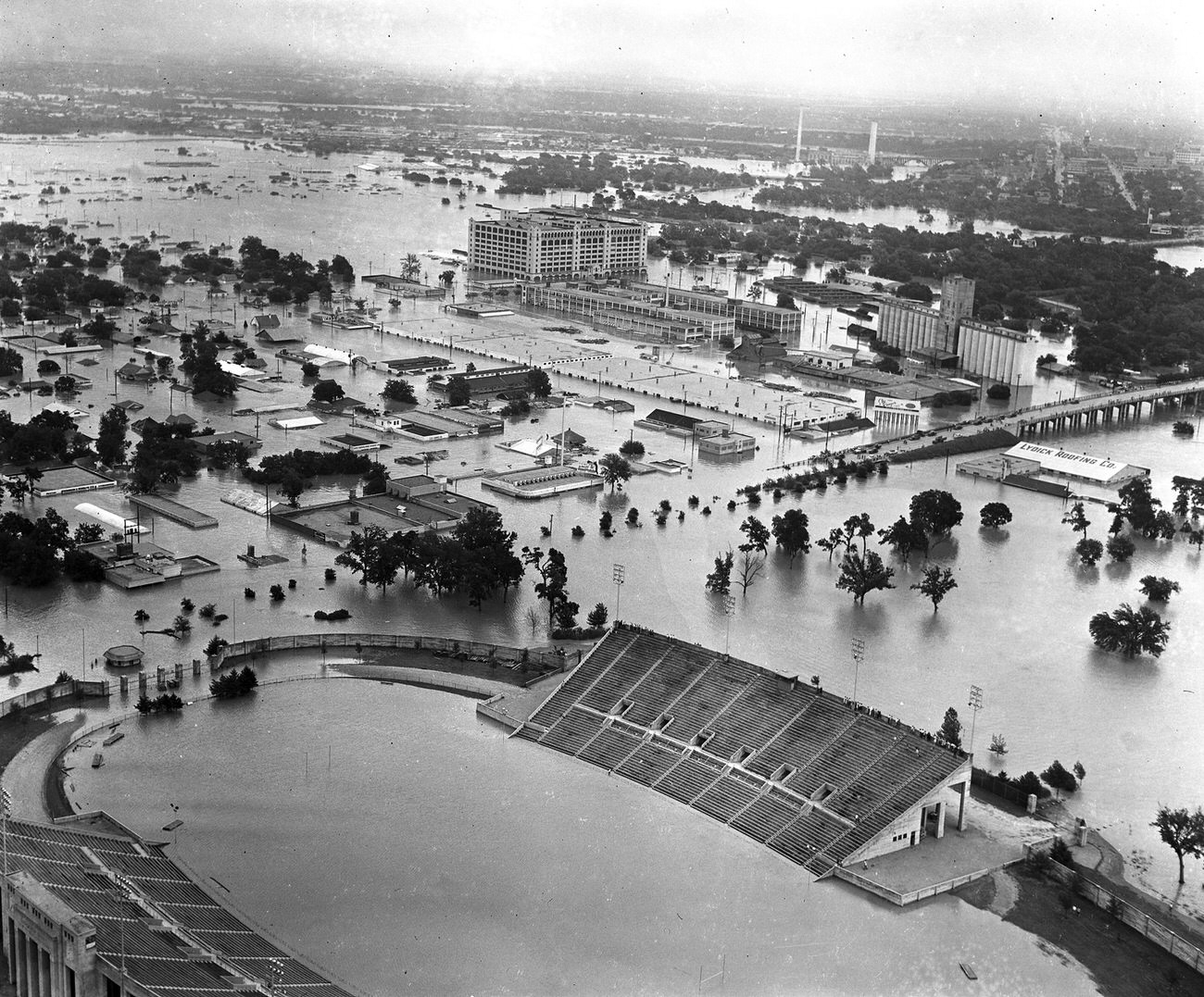
The skies opened, and the rain barreled down with a vengeance. Over just two days, amounts exceeded 10 inches in parts of Fort Worth. Heavy storms drenched the area during the afternoon and evening of May 16. By late that night and into the early hours of May 17, the rain intensified, with some parts of the city seeing several inches per hour. Once rainfall began to taper later that day, the historic damage was evident.
Montgomery Ward building, located on West 7th Street and Farrington Field
A day late here:
May 17, 1775. Just eight days after the fall of Fort Ticonderoga, a 34-year-old American officer slipped into a sleeping British fort in Quebec with only 50 men.
— Echoes of War (@EchoesofWarYT) May 17, 2026
They captured a 70-ton British warship, four bateaux, military supplies, and nine prisoners. Not a single shot was… pic.twitter.com/dkVw0MudpF
Quote:
They captured a 70-ton British warship, four bateaux, military supplies, and nine prisoners. Not a single shot was fired. The whole raid was over before the garrison finished breakfast.
The officer renamed the captured sloop "Enterprise," making it the first American naval vessel to ever carry that name. Every USS Enterprise since, from the aircraft carriers to the one Star Trek borrowed its name from, traces its lineage back to that morning on Lake Champlain.
The officer's name?
Benedict Arnold.
Yes. That Benedict Arnold.
Five years later he would switch sides and become the most infamous traitor in American history. But on this day in 1775, he handed the colonies their first naval victory, their first warship, and a name that would sail for the next 250 years.
Today is the day the siege of Malta begun. The Siege where 700 Christian knights defeated 40,000 ottomans and secured the future of Christian Europe. pic.twitter.com/20Hlhsthxt
— Trad West (@trad_west_) May 18, 2026
“If you think you can do it better, go ahead. We will step aside.” Secretary of State Marco Rubio
A day late, but on May 19, 1836, a 10-year-old girl named Cynthia Ann was kidnapped from her family home near present day Mexia.
The incident still echoes through Texas history 190 years later
The incident still echoes through Texas history 190 years later

Inspired John Wayne's The Searchers.
Cinco Ranch Aggie said:
Inspired John Wayne's The Searchers.
Also perhaps by Brit Johson - Brit Johnson, The Real Searcher.
I'm not sure a single story inspired LeMay, the author of the novel. From what I've read, he was a diligent researcher and had dozens of stories of white children kidnapped by the Indians. But Brit Johson's story is the closest parallel to the novel.
Yet again a day late but the indomitable USS England wasn't.
Effectively setting up the Marianas turkey shoot.
May 19, 1944. The South Pacific.
— Hidden History (@HiddenHistoryYT) May 19, 2026
A brand new American destroyer escort named USS England, named after a young ensign killed aboard the USS Oklahoma at Pearl Harbor, is patrolling the waters near the Solomon Islands. Her crew has never sunk anything.
American codebreakers have… pic.twitter.com/M39vyZQWTO
Quote:
May 19, 1944. The South Pacific.
A brand new American destroyer escort named USS England, named after a young ensign killed aboard the USS Oklahoma at Pearl Harbor, is patrolling the waters near the Solomon Islands. Her crew has never sunk anything.
American codebreakers have intercepted Japanese radio traffic that suggests a picket line of submarines is being moved into position to intercept the next U.S. fleet movement. England and two sister escorts are sent to hunt them.
They find I-16 first. Depth charges roll off the racks. The sonar goes silent. May 19.
Three days later, May 22, RO-106. Sunk.
The next day, May 23, RO-104. Sunk.
The day after, May 24, RO-116. Sunk.
Two days later, May 26, RO-108. Sunk.
Four days later, May 30, RO-105, with assistance from her sister ships.
Six Japanese submarines in twelve days. By one tiny destroyer escort.
By the end her depth charge racks were empty. Her crew was running on coffee and adrenaline. The Imperial Japanese Navy had lost an entire submarine picket line, a strategic disaster that helped blind them as the Americans prepared their invasion of the Marianas. The Battle of the Philippine Sea, the largest carrier battle in history, would follow weeks later, and the Japanese never saw the American fleet coming.
Admiral Ernest King, the famously dour Chief of U.S. Naval Operations, sent a message that became a tradition: "There'll always be an England in the United States Navy."
The record has stood for more than 80 years. No warship of any nation has ever come close to matching it.
Most people have never heard her name.
Effectively setting up the Marianas turkey shoot.
Her grandfather John killed that day was a revolutionary war veteran.
Ha, I've had heated debates on that subject on this board but I agree with you.
Ha, I've had heated debates on that subject on this board but I agree with you.
On this day in 1805, an American commodore parked a fleet outside a North African harbor and ended a war without firing a single shot.
— Hidden History (@HiddenHistoryYT) May 22, 2026
Most Americans have never heard his name. He is the reason the United States Navy exists in the form it does today.
The First Barbary War had… pic.twitter.com/NUFAHubf8y
Quote:
On this day in 1805, an American commodore parked a fleet outside a North African harbor and ended a war without firing a single shot.
Most Americans have never heard his name. He is the reason the United States Navy exists in the form it does today.
The First Barbary War had been grinding on for four years. The Pasha of Tripoli, Yusuf Karamanli, had been seizing American merchant ships and enslaving their crews for over a decade, demanding tribute from a young republic that could barely pay its own army. Thomas Jefferson, who hated standing militaries on principle, had finally decided enough was enough. He sent a squadron.
It went badly. The USS Philadelphia ran aground off Tripoli in 1803 and her entire crew was captured. Stephen Decatur famously snuck in and burned her at anchor to keep the Pasha from refloating her, which Lord Nelson called "the most bold and daring act of the age." But the war dragged on.
By spring 1805, the squadron commander Samuel Barron was sick, exhausted, and ready to quit. On May 22, 1805, he handed command to John Rodgers.
Rodgers did not waste time.
He had inherited four frigates, three brigs, a sloop-of-war, three schooners, two bomb vessels, and nine gunboats. The largest American fleet ever assembled to that date. Four days after taking command, he sailed the entire force directly into the harbor at Tripoli and dropped anchor in plain view of the Pasha's palace.
No bombardment. No threats. He just sat there.
The Pasha looked at his harbor, looked at twenty-two American warships pointed at his city, looked at his options, and sued for peace within the week.
The treaty was signed June 4, 1805. The American hostages came home. The Barbary states never seriously challenged American shipping again. And the United States Navy, four years old, had just forced a hostile foreign power to surrender by showing up.
Every great power moment since traces back to that anchor drop in Tripoli harbor.
221 years ago today. Almost nobody teaches this.
“If you think you can do it better, go ahead. We will step aside.” Secretary of State Marco Rubio
#OTD in 2012, a shipyard worker started a fire on USS Miami (SSN-755) so he could leave work early. The Navy decided to decommission the sub after estimates for repairs reached $700 million. The Miami joined a short list of U.S. Navy vessels lost since WWII. pic.twitter.com/0EYhTvzbjD
— U.S. Naval Institute (@NavalInstitute) May 23, 2026
Quote:
#OTD in 2012, a shipyard worker started a fire on USS Miami (SSN-755) so he could leave work early. The Navy decided to decommission the sub after estimates for repairs reached $700 million. The Miami joined a short list of U.S. Navy vessels lost since WWII.
“If you think you can do it better, go ahead. We will step aside.” Secretary of State Marco Rubio
🇺🇸TODAY IN AMERICAN HISTORY🇺🇸
— Bob Hyneman (@BobhynemanUSA) May 23, 2026
The infamous Dalton Gang reached the end of the line. Led by Bill Dalton, remnants of the notorious outlaw group attempted a brazen daylight robbery at the First National Bank in Longview, Texas.
The raid quickly spiraled into a bloody shootout as… pic.twitter.com/jlx4z0BeYx
Quote:
TODAY IN AMERICAN HISTORY
The infamous Dalton Gang reached the end of the line. Led by Bill Dalton, remnants of the notorious outlaw group attempted a brazen daylight robbery at the First National Bank in Longview, Texas.
The raid quickly spiraled into a bloody shootout as local citizens and lawmen fiercely resisted. While Bill Dalton and three accomplices managed to escape the immediate gunfire with over $2,000, they unwittingly carried the very evidence that would doom them: a stack of brand-new, unsigned $20 National Bank Notes.
Because these bills lacked the official signatures of the bank's officers, they were essentially "marked" from the moment they left the vault.
Don't mess with Texas
“If you think you can do it better, go ahead. We will step aside.” Secretary of State Marco Rubio
162 years ago today, Robert E. Lee had Ulysses S. Grant beaten. He had the entire Army of the Potomac in a trap that should have ended the war.
— Echoes of War (@EchoesofWarYT) May 23, 2026
And he was too sick to give the order.
The setup was this. After two weeks of horrific fighting at Spotsylvania, Grant did what he… pic.twitter.com/MjIXddnwRn
Quote:
Quote:
162 years ago today, Robert E. Lee had Ulysses S. Grant beaten. He had the entire Army of the Potomac in a trap that should have ended the war.
And he was too sick to give the order.
The setup was this. After two weeks of horrific fighting at Spotsylvania, Grant did what he always did. He disengaged and slid south, trying to get around Lee's right flank and force him into the open. Lee read the move instantly. He marched his army hard for 48 hours and got to the North Anna River first, putting a water obstacle between himself and the larger Union force.
Then he built something extraordinary.
Instead of forming a normal defensive line along the south bank, Lee shaped his army into an inverted V, with the point jammed against the river at a place called Ox Ford. The two arms of the V angled back away from the water on either side. To anyone studying it on a map, it looked like Lee had made a mistake. He had given Grant an easy crossing at Jericho Mill on one end and another at Chesterfield Bridge on the other.
Grant took both crossings on May 23 and 24, exactly as Lee wanted him to.
The moment Grant's army was across the river, he discovered the trap. His force was now split into three pieces. The two wings that had crossed were separated by the point of Lee's V at Ox Ford. To reinforce one wing from the other, Union troops would have to cross the river, march around the apex under Confederate fire, and cross again. It was physically impossible to do quickly. Each wing was outnumbered locally. Each could be destroyed in detail before the other could help.
Lee had it. The Army of Northern Virginia had Grant exactly where it had wanted to put a Union army for three years.
And Lee couldn't get out of his cot.
He had been fighting an intestinal illness, probably dysentery, for days. By May 24 he was running a high fever, unable to ride a horse, unable to even stand for long stretches. He had watched the Union troops cross the river through a spyglass from a carriage. None of his three corps commanders was healthy or experienced enough to coordinate the attack on his behalf. Longstreet had been shot by his own men in the Wilderness two weeks earlier. Ewell was sick. A. P. Hill was sick. Anderson was brand new to corps command. There was no one to do what Lee could not.
An aide later reported him muttering from his sickbed, over and over, "We must strike them a blow. We must never let them pass us again in safety."
No one struck the blow.
Grant figured out the danger within 48 hours, pulled his wings back across the river, and slid south again toward Cold Harbor and eventually Petersburg. The war went on for another 11 months. Roughly 200,000 more Americans died.
Historians still argue about what would have happened if Lee had been healthy on May 24, 1864. Some say nothing. Some say the Army of the Potomac would have been crippled badly enough to swing the 1864 election against Lincoln, which would have ended the war on Confederate terms. Nobody actually knows.
What we do know is that the entire arc of American history, the survival of the Union, the end of slavery, the shape of the country we live in, may have hinged on the gut bacteria of a 57-year-old man in central Virginia.
That is what military history actually looks like up close. Not destiny. Not inevitability. A sick general in a carriage, watching his chance walk away.
This X post has a map:
Lee's Trap
— ustonymc (@ustonymc) May 23, 2026
North Anna
May 23-26 1864
No amount of secrecy could hide what Robert E Lee already knew, that Ulysses S Grant had stripped his right for another shift in the opposite direction and Lee prepared for another interception alerting his men to be ready to march at the tap… pic.twitter.com/dTyMw4d8cL
“If you think you can do it better, go ahead. We will step aside.” Secretary of State Marco Rubio
Another Lee post:
245 years ago today, an American officer showed up to besiege a British fort in Georgia and immediately ran into a problem.
— Echoes of War (@EchoesofWarYT) May 22, 2026
His cannons couldn't reach the walls.
The fort, Fort Cornwallis, sat on a bluff above the Savannah River in Augusta. The walls were earth and timber, 14… pic.twitter.com/RZ6W1HPK7y
Quote:
245 years ago today, an American officer showed up to besiege a British fort in Georgia and immediately ran into a problem.
His cannons couldn't reach the walls.
The fort, Fort Cornwallis, sat on a bluff above the Savannah River in Augusta. The walls were earth and timber, 14 feet high. The American cannons were 6-pounders. From any safe distance, the shells just bounced off the dirt or sailed over.
The American officer was Lieutenant Colonel Henry Lee. He was 25 years old. The men called him Light-Horse Harry. History knows him better as the father of Robert E. Lee.
Lee had two options. He could give up and march away. Or he could find a way to shoot down into the fort from above.
There were no hills.
So he built one.
Lee's men chopped down trees and built a square log tower in a field next to the fort. They built it 30 feet tall. They reinforced it with sandbags. Then they used pulleys to haul a 6-pounder cannon to the top, pointed it down into Fort Cornwallis, and started firing at the British defenders from above their own walls.
The technique was called a Maham Tower, named for a South Carolina colonel who had used a similar trick a month earlier. It was effectively a siege engine from the 1400s, built in 1781, in Georgia, by a future Confederate general's father.
The British inside the fort tried everything. They fired their own cannons at the tower. The logs absorbed the shots. They sent a raiding party at night to burn it. The Americans drove them off. They tried to dig a tunnel under it. The tunnel collapsed.
On June 4, after a final assault, the British commander surrendered the fort. 300 prisoners. Augusta was back in American hands for the first time in two years.
Light-Horse Harry was 25 when he did this. He would later serve three terms as governor of Virginia, write the eulogy for George Washington (the "first in war, first in peace, first in the hearts of his countrymen" one), go bankrupt, get beaten nearly to death in a Baltimore riot, flee to the Caribbean, and die broke on the Georgia coast in 1818.
His youngest son, Robert, was 11 years old when he died.
The wooden tower in Augusta is gone. The fort is gone. There's a plaque.
245 years ago today, a 25-year-old kid built a medieval siege tower in the middle of the American Revolution because he refused to walk away.
“If you think you can do it better, go ahead. We will step aside.” Secretary of State Marco Rubio
85 years ago HSM Hood and HMS Price of Wales engage the Prinz Eugen and Bismarck at the Battle of the Denmark Strait. HMS Hood, the pride of the Royal Navy, is struck amidships and is blown in half with only 3 out of 1418 man crew surviving. HMS Prince of Wales is so new, she put to sea with civilian contractors aboard is damaged, and suffers mechanical issues, however before the PoW retires, she was able to land several hits on the Bismarck, and while no one was aware in the moment, those hits were what sealed the fate of the German battleship. The Prinz Eugen manages to survive the war and is sunk during atom bomb testing at Bikini Atoll in 1946
It was a tremendous loss. Still sad to consider, only 3 survivors.
85 years ago today, in the freezing grey water between Iceland and Greenland, the most famous warship in the world died in under three minutes.
— Hidden History (@HiddenHistoryYT) May 24, 2026
HMS Hood. 48,000 tons. The pride of the Royal Navy for twenty years. The ship British schoolchildren drew in their notebooks. "The… pic.twitter.com/wlCMagHOBW
It happened so quickly for HMS Hood that the forward turret fired its last salvo as the bow was vertical (although it may have been flames erupting from the barrels of the guns due to the catastrophic explosion). The British battlecruisers deck armor was a known flaw (at Jutland in 1916 3 battle cruisers met very similar ends as the Hood, with only 28 or so crew surviving the 3 wrecks out of a combined total 3000+ crew, and there are some very poignant photos of Invincible, Queen Mary, and Indefatigable meeting their ends at Jutland). HMS Hood was scheduled to have her deck armor upgraded and undergo modernizations but Sept 1939 and Hitler had other plans.
I'm a day late but the Battleship Bismarck was sunk 85 years ago yesterday after a massive search by the Royal Navy. A lucky strike by an antiquated biplane with torpedo on her rudder sealed the battleship's fate. Out of a few of 2200, only 115 are rescued. British ships begin to pick up the hundreds of men in the water but a U-Boat sighting caused the British ships to leave mid rescue while hundreds of German Sailors are still trying to get to safety. A German uboat and another German ship rescue another 5 men.
Two interesting tid bits of American ties to the pursuit are:
1) the USCGC Modoc on patrol in the North Atlantic is close enough to see the Bismarck, and watch one of the failed torpedo strikes by Fairey Swordfish biplanes. There may be some speculation that the Modoc passed on Bismarcks location to the British as well, but it is only speculation
2) USS Texas is also in the North Atlantic conducting neutrality patrols and crossed Bismarcks course a couple days before the Battle of the Denmark strait. Fortunately for the Texas, she was a couple hundred miles away when the engagement occurred
Two interesting tid bits of American ties to the pursuit are:
1) the USCGC Modoc on patrol in the North Atlantic is close enough to see the Bismarck, and watch one of the failed torpedo strikes by Fairey Swordfish biplanes. There may be some speculation that the Modoc passed on Bismarcks location to the British as well, but it is only speculation
2) USS Texas is also in the North Atlantic conducting neutrality patrols and crossed Bismarcks course a couple days before the Battle of the Denmark strait. Fortunately for the Texas, she was a couple hundred miles away when the engagement occurred
Quote:
On this day in 1943, a thousand starving Japanese soldiers ran screaming out of the fog on a frozen Alaskan island, bayonets lashed to broken sticks, to die.
The island was Attu, the westernmost tip of the Aleutian chain. It was the only piece of North American soil the Japanese had captured in the entire war. The Americans had been trying to take it back for nineteen days in the worst conditions either side had ever fought in: freezing rain, knee-deep mud, fog so thick a man could not see his own rifle, and tundra that swallowed boots and never gave them back.
The Japanese garrison was down to 800 men. They had no food left. No medicine. No way off the island. They had been told no rescue was coming.
Their commander was Colonel Yasuyo Yamasaki, a 51 year old career officer who had been on Attu for less than three weeks. On the night of May 28, he gathered every man who could still hold a weapon. This included his wounded. Those who could not walk were shot or given grenades. Those who could limp were given anything that could stab. Some had bayonets. Some had bayonets lashed to ski poles. Some had bayonets lashed to tent stakes.
Then he led them straight at the American line in the dark.
It was the largest banzai charge of the Pacific war up to that point.
They came through a gap in the fog at 3:30 AM, completely silent until they were inside the American positions. Then they screamed. They overran the front line in minutes. They overran the artillery batteries behind it. They reached the field hospital and butchered the wounded in their cots. They got within a hundred yards of the American command post before they were finally stopped by a scratch force of engineers, cooks, military police and walking wounded who fired at point blank range until their rifles were too hot to hold.
When the sun came up, the snow on the slope was carpeted with bodies.
The Americans counted 500 dead Japanese on the ground in front of them. Then they began finding the rest. Almost all of the remaining defenders had killed themselves with grenades held against their chests. American soldiers walking the field afterward described finding small groups of three or four men curled in a circle, their bodies folded around the same grenade.
Out of a Japanese garrison of nearly 2,900, the Americans took 28 prisoners.
It was the second highest American casualty rate of any battle in the Pacific war, after Iwo Jima.
Almost no one in the United States has heard of it.
On this day in 1943, a thousand starving Japanese soldiers ran screaming out of the fog on a frozen Alaskan island, bayonets lashed to broken sticks, to die.
— Voices of WW2 (@VoicesofWW2) May 29, 2026
The island was Attu, the westernmost tip of the Aleutian chain. It was the only piece of North American soil the Japanese… pic.twitter.com/nGglbEO960
Thank goodness Truman had the balls to drop the bombs.
164 years ago today, at dusk on a swampy plain six miles east of Richmond, a Union minie ball struck Joseph E. Johnston in the right shoulder, and a shell fragment hit him in the chest a half-second later.
— Echoes of War (@EchoesofWarYT) June 1, 2026
He fell off his horse with a shattered shoulder blade and two broken… pic.twitter.com/T8Y34VHFtu
Featured Stories
See All
12:14
6h ago
3.5k
Sunday loss pushes Aggieland regional to Game 7
by Richard Zane
7:19
6h ago
1.8k
Rapid Reaction: 14-3 loss forces winner-take-all on Monday
by Ryan Brauninger
4:21
14h ago
1.5k
Jayce Johnson is strengthening bonds among A&M's 2027 class
by Jason Howell
10:12
1d ago
9.8k
Moss roars as Texas A&M reaches regional final
by Richard Zane
4:49
14h ago
2.7k
Aggie DT pledge Myels Smith locks down recruitment following OV
by Jason Howell
RetvrnAg
FINAL from Blue Bell: Southern Cal 14, #12 A&M 3 (College Station Regional)
in Billy Liucci's TexAgs Premium
11